
According to Assocham, "the prospects for improving bilateral economic relations seem extraordinary. . .Pakistan will benefit by improving trade and economic relations with a fast growing country like India".
Among the 30 Sensex firms, Mahindra & Mahindra, IndusInd Bank, Bharti Airtel, Axis Bank, Tata Motors and ICICI Bank were the biggest laggards. In contrast, Tata Steel, Tata Consultancy Services, NTPC, JSW Steel, Asian Paints and Reliance Industries were gainers.

Sanctioning Russian oil would have led to a sharp surge in oil prices to above $80 per barrel levels, which would impact pump prices in the US ahead of midterm elections next year.

Equity benchmark indices Sensex and Nifty ended lower on Friday, dragged by auto stocks and relentless foreign fund outflows. Weak US markets and tariff threats also dented investor sentiment. The 30-share BSE benchmark Sensex dropped 424.90 points or 0.56 per cent to settle at 75,311.06.

India has upgraded its technical mission in Kabul to an embassy, with External Affairs Minister S Jaishankar acknowledging the Taliban's consideration of India's security concerns. The announcement was made during talks with Afghan Foreign Minister Amir Khan Muttaqi, marking a significant step in advancing ties between the two nations.

Equity investors are up for an eventful trading week ahead as the 90-day suspension period of the reciprocal tariffs announced by US President Donald Trump ends on July 9, analysts said, adding that a positive outcome from the trade negotiations could further lift market sentiment, particularly benefiting trade-sensitive sectors.

'The frenzy for gold is primarily due to the uncertainty surrounding the tariff war.'

Equity markets this week would keenly track the upcoming GST Council meeting, macroeconomic data announcements and trading activity of foreign investors for further movement, analysts said. Moreover, developments related to tariff negotiations, global market trends and auto sales data would also drive investors' sentiment.
Stock markets are in for an event-heavy week ahead with a raft of Q1 earnings from blue-chips, the US Fed interest rate decision and foreign investors trading activity driving investors' sentiment, analysts said. Macroeconomic data announcements, monthly auto sales numbers and global market trends would also guide movement in the domestic equities, they said.

Among Sensex firms, Bharat Electronics rose the most by 4.26 per cent. HCL Tech gained 2.57 per cent, Bajaj Finance by 2.19 per cent, TCS by 1.99 per cent, Tech Mahindra by 1.88 per cent and Infosys by 1.85 per cent. Gains in Axis Bank and State Bank of India also supported the rally. However, Mahindra & Mahindra emerged as the biggest loser, falling by 2.47 per cent. Maruti dropped 1.53 per cent and Tata Motors by nearly 1 per cent due to profit-taking. UltraTech, Eternal and Power Grid were also among the laggards.
From the Sensex firms, Hindustan Unilever, Kotak Mahindra Bank, Trent, Reliance Industries, Asian Paints and ITC were among the gainers. However, Bharat Electronics Ltd, Tech Mahindra, UltraTech Cement, Maruti and Eternal were among the laggards.

Among Sensex firms, Mahindra & Mahindra, Asian Paints, Infosys, Titan, Sun Pharma, Tata Consultancy Services, Tech Mahindra and Power Grid were the major laggards. However, Bajaj Finance, Eternal, UltraTech Cement and Reliance Industries were among the gainers.

'Defence, capital goods, engineering, capital market-related stocks, autos, and cement sectors are my bullish bets for Samvat 2082.'

Foreign investors offloaded Indian equities worth nearly Rs 21,000 crore in the first half of August, pressured by US-India trade tensions, lacklustre first-quarter corporate earnings, and a weakening rupee.

From the Sensex firms, Bajaj Finance, Infosys, Hindustan Unilever, ICICI Bank, HCL Tech, UltraTech Cement, Bajaj Finserv, State Bank of India, Tata Consultancy Services, Reliance Industries, Axis Bank and Larsen & Toubro were among the major gainers. However, Trent, Tata Steel, Tech Mahindra and Maruti were among the laggards.

There was no smooth surge in middle class prosperity for foreign businesses to tap into because of the Indian economy was mismanaged, argues Debashis Basu.

'Of the 20 trading days of January till January 28, FIIs have been selling for 19 trading days'. 'When did FIIs withdraw money with this kind of intensity?' 'It never happened. It's the first. It did not happen even during the 2008-2009 financial crisis when Lehman went under.' 'Even then you did not have like a 19-day selling spree from the FIIs.'

'Many global investors have been overweight on dollar assets, so some diversification or hedging is naturally expected.'

Debroy's economic interests and research work covered numerous areas such as economic theory, income inequality, and infrastructure financing.
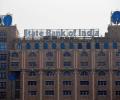
Country's largest lender State Bank of India (SBI) is looking to be among 10 top global banks in market capitalisation terms in the next five years, chairman CS Setty said on Wednesday. "The scope for value creation for the stakeholders is potentially very high. So the larger ambition is if the market supports whether we can be part of the top 10 global banks in terms of the market capitalisation (five years)," he said after listing of shares issued under Qualified Institutional Placement (QIP) at NSE.

From the 30-share pack, Adani Port, Bharti Airtel, Asian Paints, IndusInd Bank, Bajaj Finserv, Reliance Industries, Infosys, UltraTech Cement, HDFC Bank, HCL Technologies and ICICI Bank were among the laggards. Tata Motors, Axis Bank, Maruti, Larsen & Toubro, ITC and Tata Steel were among the gainers.

Equity investors would track global market trends, inflation data and trading activity of foreign investors for further cues this week, analysts said. Moreover, progress of monsoon and developments related to trade talks would also be monitored by investors, experts noted.
Most pharma shares dropped, dragging the BSE Healthcare index down by 2.14 per cent after Trump's move to impose 100 per cent import tariffs on pharmaceutical drugs from October 1. Wockhardt shares tanked 9.4 per cent.
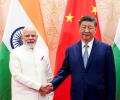
'What's currently underway is not a 'reset'.' 'What needs to be arrived at is a new balance.'

Foreign flows into Indian equities are expected to pause in the short to medium term, say analysts. The outlook is influenced by multiple factors, including rising oil prices, actions from global central banks, climbing bond yields, and the dollar index gaining prominence. "Valuations appear rich with the markets at record highs.

'As long as Sebi maintains transparency and market stability, the Jane Street episode is unlikely to deter long-term foreign capital.'

Among Sensex firms, Tech Mahindra, HCL Tech, Eternal, Axis Bank, Maruti, Tata Steel, HDFC Bank and Asian Paints were the gainers. However, Adani Ports, Trent, Tata Motors, Hindustan Unilever and NTPC were among the laggards.

Life Insurance Corporation (LIC) , the country's largest domestic institutional investor (DII), has seen a Rs 46,000 crore erosion in the value of its equity holdings amid market downturns in July. The benchmark indices, Nifty 50 and BSE Sensex, have slipped 2.6 per cent from their June 2025-end level to 24,837 and 81,463.09 respectively.
Sensex sinks 573 pts on global tensions and high crude prices
From the Sensex pack, Tata Motors, Sun Pharmaceutical, Bharti Airtel, Bajaj Finserv, ICICI Bank, Mahindra & Mahindra and JSW Steel were the gainers. Tech Mahindra, HCL Technologies, Asian Paints, Titan, Infosys, State Bank of India, Tata Consultancy Services and HDFC Bank were the laggards.

Among Sensex firms, Bharat Electronics, Eternal, Mahindra & Mahindra, Kotak Mahindra Bank, Tata Motors and Power Grid were the gainers. However, Adani Ports, ITC, UltraTech Cement and Titan were among the laggards.

'Other sectors that manage the savings pools of Indians are giving tough competition to life insurance companies.'

From the Sensex firms, Kotak Mahindra Bank, Eternal, Asian Paints, NTPC, Bharat Electronics Ltd, Adani Ports, Infosys and State Bank of India were among the major gainers. However, Titan tumbled over 6 per cent. Trent, Axis Bank, Maruti and Hindustan Unilever were also among the laggards.

Domestic institutional investors (DIIs) poured in Rs 94,829 crore of fresh money into Indian equities in August, the second-highest monthly inflow after record Rs 1.07 trillion influx in October 2024.

Announced in January 2024, the BPGPA MBA is a blended (hybrid) programme that combines on-campus, in-person sessions and live interactive online sessions.

The State Bank of India is likely to finalise the acquisition of two banks in Asia and Africa in six to eight weeks, its chairman A K Purwar said on Tuesday.
From the Sensex firms, Adani Ports, Bajaj Finance, Tech Mahindra, IndusInd Bank, Nestle and Tata Steel were among the major laggards. In contrast, Mahindra & Mahindra, Titan, Larsen & Toubro, Bharti Airtel and Maruti were among the gainers.

'We are receiving a steady stream of interest from well-established foreign universities.'

From the Sensex firms, HCL Tech, Tata Steel, Tech Mahindra, Reliance Industries, Bharat Electronics and ICICI Bank were among the laggards. Bajaj Finance, Hindustan Unilever, UltraTech Cement and Power Grid were among the gainers.

After heavy selling in the past two months, foreign investors have staged a strong comeback to Indian equities with a net investment of Rs 24,454 crore in the first week of December amid stabilising global conditions and expectations of potential US Federal Reserve rate cuts. This revival follows significant outflows in the preceding months, with foreign portfolio investors (FPIs) pulling out a net Rs 21,612 crore in November and a massive Rs 94,017 crore in October - the worst monthly outflow on record.
